
The Ultimate Guide to Building Quality Backlinks in 2024: A Step-by-Step Strategy
For SEO professionals and digital marketers, the quest for quality backlinks represents both the greatest opportunity and the most persistent challenge in search engine optimization. You understand their critical importance—Google’s algorithms have consistently ranked backlinks among the top three ranking factors for over two decades. Yet, the practical process of building quality backlinks often feels elusive, buried under contradictory advice and questionable tactics.
This comprehensive guide moves beyond theoretical discussions to deliver an actionable, proven link building strategy. We’re dismantling the myth that effective link acquisition requires mysterious techniques or questionable shortcuts. Instead, we present a systematic, ethical framework that transforms backlink building from a frustrating guessing game into a predictable, scalable marketing channel.
By implementing the 7-step methodology outlined here, you’ll develop the capability to consistently identify, earn, and leverage the types of high authority backlinks that drive measurable improvements in search visibility, organic traffic, and domain authority.
In a Nutshell: Core Principles for Success
- Authority Trumps Quantity: Ten links from respected industry publications deliver more SEO value than 1,000 links from low-quality directories.
- Systematic Process Over Random Acts: Successful link building strategy requires a repeatable framework, not sporadic outreach efforts.
- Value Creation Precedes Link Acquisition: You must develop genuinely link-worthy content assets before initiating outreach campaigns.
- Relationship Building is Fundamental: Sustainable link building revolves around establishing genuine connections with publishers, not transactional exchanges.
- Continuous Analysis Drives Improvement: Regular auditing of both your backlink profile and competitor strategies reveals your highest-potential opportunities.
Complete Roadmap: What You’ll Learn
Backlink Fundamentals: Beyond Basic Definitions
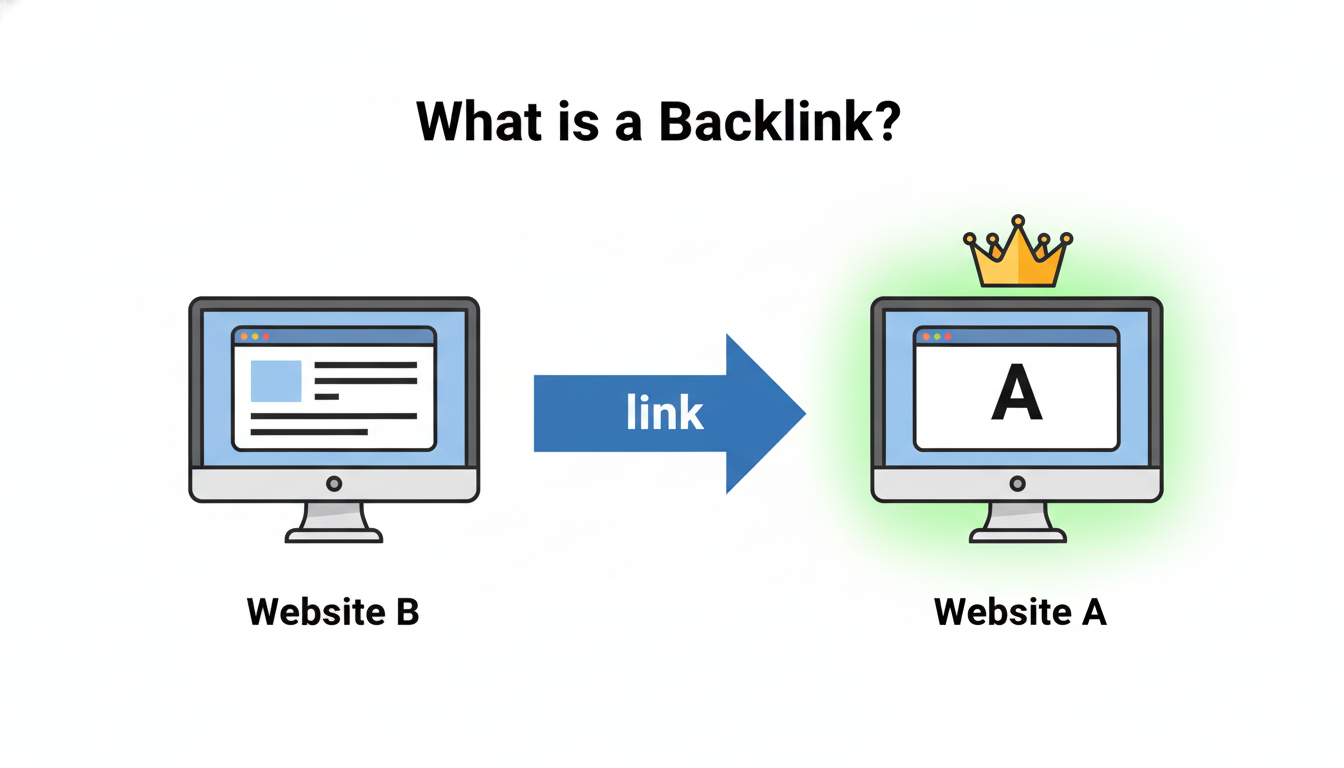
While most definitions describe backlinks simply as “links from one website to another,” this oversimplification obscures their strategic importance. In algorithmic terms, each backlink functions as a weighted vote of confidence, with the voting power determined by the linking domain’s authority and relevance.
Essential Insight
Google’s official documentation on search fundamentals explicitly confirms that links remain a primary ranking factor because they represent “a vote of confidence from one page to another.” The search giant evaluates both the quantity and, more importantly, the quality of these votes.
Understanding what is backlinking at a strategic level requires recognizing three key dimensions:
1. Editorial vs. Non-Editorial Links
Editorial links—those placed voluntarily within the main content of a webpage—carry maximum algorithmic weight. These occur when publishers genuinely find your content valuable enough to reference. Non-editorial links (footer links, widget links, directory submissions) typically carry minimal or negative SEO value.
2. Follow vs. Nofollow Attributes
The technical implementation matters. While “dofollow” links (the default) pass ranking authority, “nofollow” links (using rel=”nofollow”) don’t pass traditional PageRank. However, both types can generate valuable referral traffic and brand visibility. Google’s guidance suggests treating them as hints rather than directives.
3. Contextual Relevance Signals
Search algorithms analyze the surrounding content to determine topical relevance. A link from a financial website to your investment research carries more weight than the same link from a cooking blog. This contextual evaluation makes niche relevance as important as domain authority in building quality backlinks.
Why Link Quality Determines SEO Success
The transition from quantity-focused to quality-focused link building represents the most significant evolution in SEO strategy over the past decade. Google’s Penguin algorithm update (2012) and subsequent refinements fundamentally altered the ranking equation, penalizing manipulative link schemes while rewarding editorial, merit-based links.
Critical Consideration
Participation in manipulative link schemes—including purchased links, private blog networks (PBNs), and automated directory submissions—violates Google’s Webmaster Guidelines and can trigger manual actions or algorithmic penalties. Recovery requires substantial effort, including comprehensive link cleanup and reconsideration requests.
The Business Impact of Quality Backlinks
Beyond search rankings, a robust portfolio of high authority backlinks delivers measurable business outcomes:
Direct Referral Traffic Acceleration
Links from high-traffic industry publications deliver immediate, targeted visitors. According to Semrush’s industry research, websites with strong backlink profiles receive 3-5 times more referral traffic than those with weak or spammy link profiles.
Brand Authority & Trust Building
Featured placement on respected platforms creates instant third-party validation, reducing conversion friction and establishing market leadership. This “halo effect” extends beyond SEO to influence direct conversions and customer acquisition costs.
Content Discovery & Indexing Velocity
Search engine crawlers follow links to discover new content. Websites with diverse, authoritative backlinks experience faster indexing of new pages and quicker ranking progression for fresh content.
The 7-Step Framework for Building Quality Backlinks
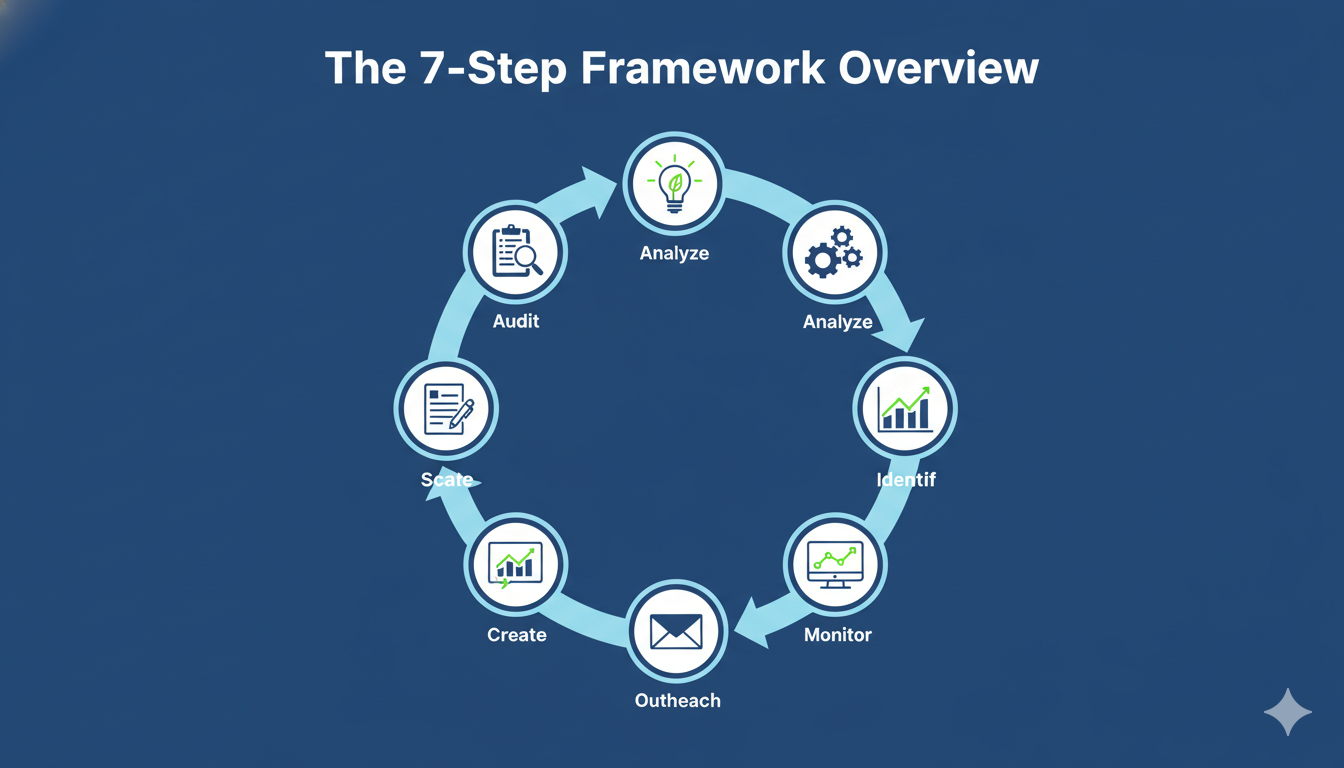
This systematic approach transforms link building from random outreach to a predictable, scalable marketing function. Each step builds upon the previous one, creating a compounding effect over time.
Conduct Comprehensive Backlink Audits
Begin by analyzing your existing link profile using tools like Ahrefs or Semrush. Identify your current linking domains, anchor text distribution, and potential toxic links. This audit establishes your baseline and reveals patterns in your successful link acquisition efforts.
Pro Tip:
Use Google Search Console’s “Links” report to identify your top linked pages and referring domains directly from Google’s data.
Key Audit Metrics:
- Domain Authority/DR of linking domains
- Anchor text diversity and optimization
- Link growth trends over time
- Geographic distribution of links
- Ratio of follow vs. nofollow links
Analyze Competitor Link Profiles
Your competitors have already invested resources in finding quality backlinks. Reverse-engineer their success by analyzing their backlink profiles. Tools like Ahrefs’ “Competing Domains” report or Semrush’s “Backlink Gap” analysis reveal opportunities where competitors have links that you don’t.
Focus on identifying “link gaps”—websites linking to multiple competitors but not to you. These represent your lowest-hanging fruit for outreach. According to a Backlinko study, pages ranking in position #1 have 3.8 times more backlinks than those ranking in position #10.
Competitor Analysis Checklist:
- Identify their top 20-50 referring domains
- Note the types of content attracting links
- Analyze their anchor text strategy
- Identify their guest post opportunities
- Track their link growth velocity
Develop Link-Worthy Content Assets
You cannot ask for links without offering genuine value. Your link building strategy must be built on assets that naturally attract references. Research from Moz shows that certain content formats consistently outperform others for link acquisition:
High-Performing Content Types:
Original Research & Data Studies: Unique data attracts 3x more links than standard blog posts. Consider surveys, original studies, or analysis of proprietary data.
Comprehensive Guides & Tutorials: Become the definitive resource on a specific topic within your niche.
Interactive Tools & Calculators: Practical tools that solve specific problems generate ongoing link value.
Expert Roundups & Industry Insights: Curate insights from recognized authorities to leverage their networks.
Implement Strategic Outreach Campaigns
Effective outreach requires personalization, relevance, and clear value proposition. Avoid generic templates and instead craft customized emails that reference specific content on the target site and explain exactly why your resource would benefit their audience.
Avoid These Outreach Mistakes:
❌ Generic “Dear webmaster” salutations
❌ Failing to reference the recipient’s work
❌ Unclear value proposition
❌ Asking for links without offering value
❌ Poorly timed follow-ups
Outreach Best Practices:
- Personalize every email with specific references
- Keep emails concise (150-200 words maximum)
- Make your ask clear and easy to fulfill
- Follow up strategically (3-7 days after initial contact)
- Track everything in a CRM or spreadsheet
Leverage Broken Link Building
This white-hat technique involves finding broken links on relevant websites and suggesting your content as a replacement. It’s particularly effective because you’re helping webmasters fix problems while earning links. Use tools like Ahrefs’ Broken Link Checker or dedicated Chrome extensions to identify opportunities.
According to Search Engine Journal research, broken link building campaigns achieve an average 30-40% success rate, significantly higher than standard guest post outreach.
Broken Link Building Process:
- Identify resource pages in your niche
- Scan for broken links using tools
- Find relevant replacement content (yours or create new)
- Contact webmaster with helpful replacement suggestion
- Follow up if no response in 7-10 days
Execute Digital PR & Relationship Building
Long-term link building strategy success depends on building genuine relationships with journalists, bloggers, and industry influencers. Digital PR involves creating newsworthy content and pitching it to relevant media outlets.
Relationship Building Tips:
• Engage with influencers’ content before asking for anything
• Provide value first (share their work, comment thoughtfully)
• Attend industry events and build offline connections
• Collaborate on joint projects or co-authored content
• Maintain ongoing communication beyond link requests
Effective Digital PR Tactics:
- Publish original research with media-friendly data visualization
- Create expert commentary on trending industry topics
- Develop seasonal or newsworthy content with clear angles
- Build journalist relationships through HARO (Help a Reporter Out)
- Monitor brand mentions and request link attribution
Monitor, Measure & Optimize Continuously
Link building requires ongoing optimization based on performance data. Track which strategies, content types, and outreach approaches yield the best results, then double down on what works.
Implement a systematic tracking system using tools like Google Analytics, your SEO platform, and a dedicated outreach tracker. According to BrightEdge research, companies that systematically track and optimize their link building efforts achieve 2.5x better ROI than those using ad-hoc approaches.
Key Performance Indicators:
- Number of new referring domains per month
- Average Domain Authority of acquired links
- Link acquisition cost vs. SEO value
- Conversion rate of outreach campaigns
- Impact on target keyword rankings
Quality vs. Toxic Backlinks: Comparative Analysis
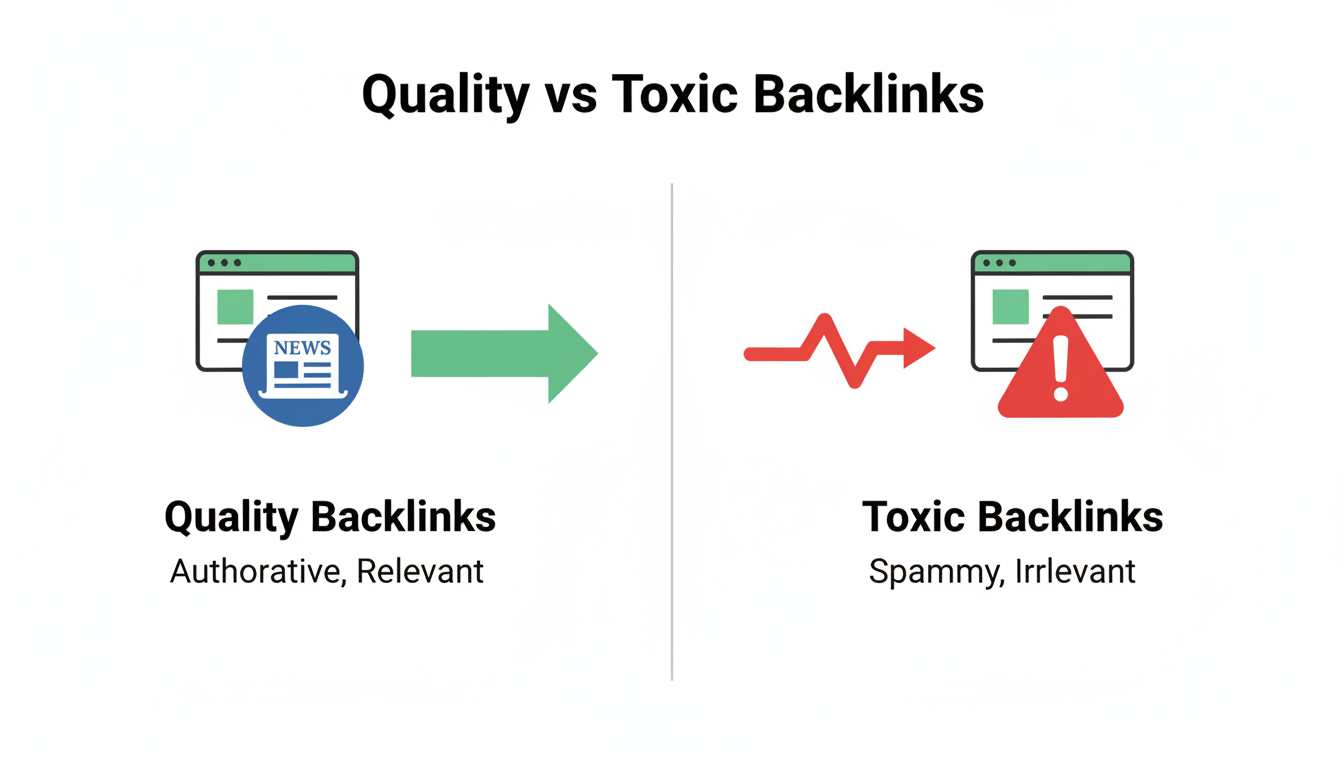
| Evaluation Criteria | Quality Backlinks | Toxic Backlinks |
|---|---|---|
| Source Authority | High Domain Rating (70+) Established industry authority |
Low Domain Rating (<20) New or penalized domains |
| Content Relevance | Topically relevant to your niche Natural contextual placement |
Completely unrelated topics Irrelevant or spammy context |
| Acquisition Method | Earned through valuable content Editorial placements |
Purchased or exchanged Automated directory submissions |
| Traffic Potential | Significant referral traffic Targeted audience alignment |
Zero or irrelevant traffic Bot or spam traffic only |
| SEO Impact | Boosts rankings and authority Improves topical relevance |
Triggers penalties Damages domain reputation |
| Longevity | Sustainable and persistent Gains value over time |
Temporary or removed Decreases in value |
Advanced Techniques for Competitive Niches
In saturated markets, standard link building approaches may not deliver sufficient results. These advanced strategies can help you break through competitive barriers:
1. The Skyscraper Technique 2.0
Go beyond basic content improvement by incorporating interactive elements, original data visualization, and comprehensive multimedia. Create resources that are so valuable they become the definitive reference in your niche.
2. Strategic Partnerships & Co-Marketing
Develop formal partnerships with complementary businesses to create joint content, webinars, or research studies. These collaborations naturally generate cross-linking opportunities while expanding your audience reach.
3. Niche-Specific Resource Pages
Create comprehensive resource directories or tools specifically for your industry. When these become go-to references, they attract natural links from other industry participants.
4. Academic & Government Link Building
Target .edu and .gov domains by creating content relevant to academic research or public policy. These links carry exceptional authority due to the stringent quality standards of these domains.
Key Performance Indicators & Success Metrics
Effective link building strategy requires rigorous measurement. Track these KPIs to optimize your efforts:
Quantity Metrics
• New referring domains
• Total backlinks
• Link growth rate
Quality Metrics
• Average DA/DR
• Spam score
• Relevance score
Impact Metrics
• Ranking improvements
• Organic traffic growth
• Referral traffic
Efficiency Metrics
• Outreach success rate
• Cost per link
• Time investment
Critical Mistakes That Undermine Link Building
Major Pitfalls to Avoid:
1. Quantity Over Quality Obsession: Chasing link counts rather than authority undermines long-term SEO health.
2. Ignoring Relevance Signals: Links from irrelevant sites dilute topical authority and may trigger algorithmic filters.
3. Neglecting Technical SEO Foundation: Poor site structure and crawlability reduce the value of acquired links.
4. Inconsistent Effort: Sporadic link building produces minimal results compared to consistent, ongoing efforts.
5. Failing to Diversify Anchor Text: Over-optimized anchor text patterns appear manipulative to search algorithms.
Frequently Asked Questions
How long does it take to see results from quality backlink building?
Initial results typically appear within 4-8 weeks, with significant impact accumulating over 3-6 months. Google needs time to crawl new links and recalibrate rankings. However, high-authority links from major publications can produce noticeable ranking improvements within 2-4 weeks. Consistency is crucial—regular link acquisition compounds over time, creating sustainable ranking improvements.
What’s the optimal number of backlinks to aim for each month?
Rather than focusing on arbitrary numbers, prioritize quality and relevance. A strategic approach might aim for 5-10 high-authority links (DA 50+) monthly rather than dozens of low-quality links. Research from Ahrefs shows that top-ranking pages typically gain 2-5 new referring domains monthly, emphasizing steady, quality-focused growth over quantity.
How do I identify and remove toxic backlinks?
Use tools like Google Search Console, Ahrefs, or Semrush to identify potentially toxic links. Look for patterns like sudden spikes from low-quality domains, irrelevant anchor text, or links from known spam networks. Create a disavow file for genuinely harmful links, but proceed cautiously—most “low-quality” links are ignored by Google rather than penalized. When in doubt, consult with an SEO professional before disavowing.
Is guest posting still effective for link building in 2024?
Yes, when executed strategically. Focus on relevance and quality over quantity. Target publications with engaged audiences in your niche, and ensure your guest posts provide genuine value rather than thinly-veiled promotional content. According to Semrush research, 60% of marketers still consider guest posting an effective link building tactic when combined with other strategies.
What’s the role of social signals in link building?
While social signals don’t directly impact rankings, they significantly influence link acquisition. Content that performs well socially attracts more visibility, increasing the likelihood of earning editorial links. A Moz study found strong correlation between social shares and backlink acquisition, suggesting that social promotion should complement rather than replace traditional link building efforts.
Ready to Transform Your Link Building Strategy?
Stop wasting resources on ineffective link building tactics. Implement this proven 7-step framework to systematically build a powerful backlink portfolio that drives sustainable SEO growth and business results.
Your Next Steps:
1. Conduct your initial backlink audit this week
2. Identify 3-5 competitor link gaps to target
3. Develop one link-worthy content asset in the next 30 days
4. Implement systematic outreach starting next month
Remember: Effective link building integrates seamlessly with broader SEO strategies that position your brand for long-term success in evolving search landscapes.
Start Your Link Building Audit Today